
How to Prevent Faux Leather From Peeling and Cracking
Last Updated: November 19, 2026
Quick Summary
To learn how to prevent faux leather from peeling, keep the coating supple, clean it gently, and keep it away from heat. Wipe with mild soap and lukewarm water, dry right away, and avoid alcohol, bleach, and harsh solvents that strip the finish. Store items in a cool, dry place away from sun and radiators.
- Faux leather peels when the polyurethane or PVC coating separates from its backing fabric, which is called delamination.
- Patch-test any cleaner on a hidden spot and wait 24 hours before using it on the whole item.
- Never dry faux leather shoes with a hair dryer or direct heat, which softens the adhesive.
- Store faux leather in a breathable cotton dust bag instead of sealed plastic bags that trap moisture.
- Condition shoes every 2-3 weeks and purses monthly to keep the coating flexible.
Table of Contents
- What Causes Faux Leather to Peel
- How to Clean Faux Leather Without Damaging the Coating
- How to Stop Faux Leather From Peeling Shoes
- How Long Does Faux Leather Last With Proper Care
- Preventing Peeling on Your Next Faux Leather Project
- Frequently Asked Questions
What Causes Faux Leather to Peel
Faux leather peels when the polyurethane or PVC coating separates from its backing fabric.
At Chic Girl Supplies, we hear the same frustration from makers constantly.
Here is what actually breaks down the coating:
- Friction and abrasion from daily handling, pockets, and straps
- Body oils and sweat soaking into the surface
- Heat and sunlight drying out the flexible top layer
Cheap faux leather, often called bonded leather, uses a thin coating over a glued-together fiber base.
The fix is not complicated. Keep the coating supple, keep it clean, and keep it away from heat.
How to Clean Faux Leather Without Damaging the Coating
Clean faux leather with a soft cloth, mild soap, and lukewarm water, then wipe dry right away. Skip alcohol, bleach, and harsh solvents. Those strip the finish and speed up peeling. That basic routine works on most items, but the coating on your purse, jacket, or shoes may be polyurethane (PU), PVC, or a bonded-leather composite, and those materials do not all respond the same way to the same cleaner.
Match the cleaner to the material
- PU leather (polyurethane coating over fabric): The most common faux leather on bags, jackets, and upholstery. Mild soap and water is usually safe. Avoid alcohol-based wipes, acetone, and oil-based conditioners, which can soften or cloud the polyurethane top layer.
- PVC (polyvinyl chloride): More rigid and glossy than PU. It resists water well but can be damaged by strong solvents and by prolonged heat. Wipe with mild soap and water, and do not leave it in a hot car or near a radiator.
- Bonded leather: A thin polyurethane or vinyl coating over shredded leather fibers glued to a backing. The adhesive layer is the weak point, so keep water minimal, never soak it, and dry immediately. Bonded leather is the most likely of the three to delaminate, and cleaning cannot restore a bond that has already failed.
If you are not sure which material you have, check the tag, the product listing, or the care label. When that information is unavailable, treat the item as the most delicate option and test first.
Patch-test before you clean the whole item
A patch test takes a day and can save the finish. Choose a hidden spot, such as the inside of a hem, the underside of a strap, or the back of a cushion.
- Apply a small amount of your cleaner to a white cloth.
- Rub gently on the hidden spot for a few seconds.
- Wait 24 hours and check for color change, tackiness, clouding, or lifting at the edges.
- If the spot looks unchanged, proceed with the full item. If anything looks different, stop and try a milder product.
Watch out: Never test a new cleaner or conditioner on a visible area first, and never mix products. A cleaner that works on one faux leather item can damage another because coatings and adhesives vary by manufacturer.
Step-by-step cleaning
- Wipe loose dust with a dry microfiber cloth.
- Mix a few drops of mild soap into a bowl of lukewarm water.
- Dampen a cloth, wring it out, and wipe gently in small circles.
- Rinse with a clean damp cloth.
- Dry with a soft towel and let it air out fully.
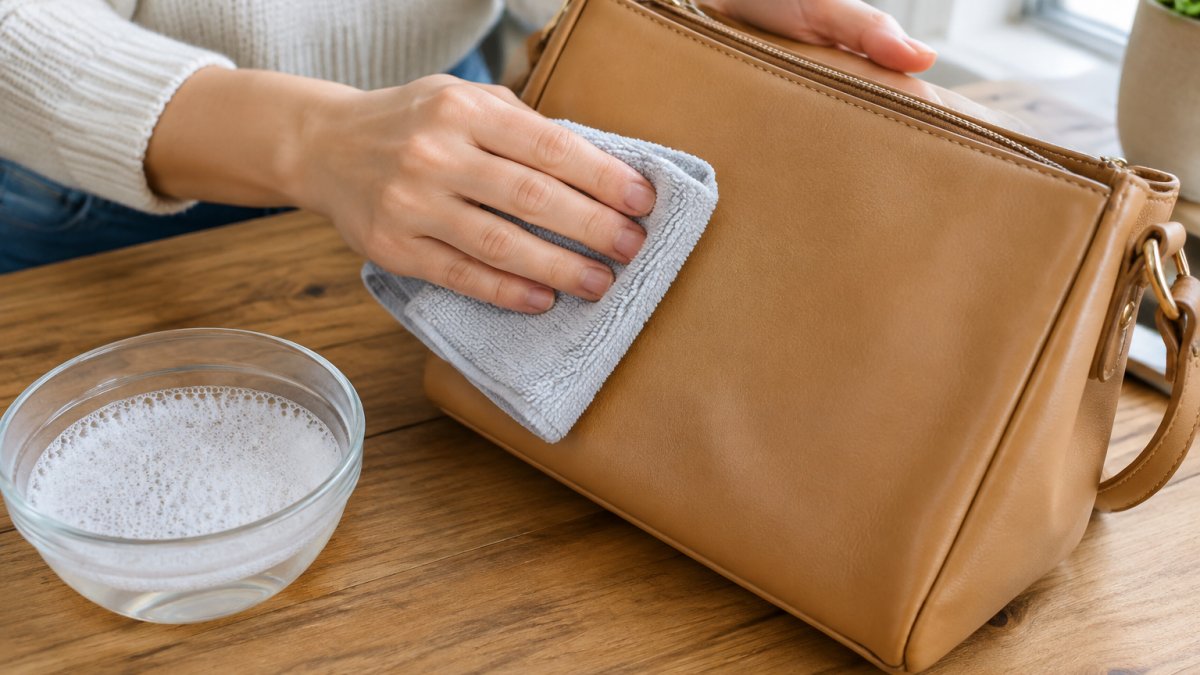
A common mistake is scrubbing hard at a stain. That rubs the coating thin. Dab instead of scrub. For sticky residue, let a damp cloth sit on the spot for a minute to loosen it rather than rubbing harder.
What not to use
Avoid alcohol, bleach, ammonia, acetone, and abrasive pads. These strip the protective finish and can break down the adhesive between the coating and the backing. Oil-based leather conditioners made for genuine leather are also a poor match for most faux leather because the coating cannot absorb them the way a hide does; they can sit on the surface, attract dirt, and soften the bond.
For a deeper walkthrough, our guide on how to clean faux leather bags covers stubborn marks and edge cases step by step.
How to Stop Faux Leather From Peeling Shoes
Shoes peel faster than anything else because they flex, sweat, and scrape all day. To stop faux leather from peeling shoes, focus on the stress points: the toe crease, the heel, and the sides.
Try this routine:
- Wipe shoes after every wear to remove salt and grime.
- Apply a thin layer of faux leather conditioner every few weeks.
- Let wet shoes air dry away from radiators.
Watch out: never dry faux leather shoes with a hair dryer or direct heat. Heat softens the adhesive and the coating lifts at the edges.
How Long Does Faux Leather Last With Proper Care
The lifespan of faux leather depends on the bond between the coating and the backing fabric, as well as how the item is used and cared for.
What prevention can and cannot do
Prevention is about slowing wear on intact material, not reversing breakdown that has already started. Cleaning, conditioning, and careful storage can reduce friction damage, keep the coating supple, and limit exposure to heat and moisture.
This distinction matters when you choose products. A conditioner labeled for faux leather may help keep an intact coating flexible, but it will not re-adhere a lifted edge.
Choose products by material, not by label alone
- PU leather: Look for water-based conditioners and cleaners labeled as safe for polyurethane. Avoid solvent-heavy products.
- PVC: Mild soap and water is usually enough. PVC does not need conditioning the way PU does, and adding oils can leave a residue.
- Bonded leather: Keep products to a minimum. The adhesive layer is the weak point, and excess moisture or oil can speed separation.
- Coated fabrics: Follow the fabric care label first. When in doubt, use the mildest product and patch-test.
A simple rule: if a product's label does not name the material it is compatible with, test it on a hidden spot and wait 24 hours before using it on the item.
Storage and environment
Most faux leather deterioration happens between uses, not during them. Heat, sunlight, humidity, and poor ventilation all accelerate breakdown.
- Store items in a cool, dry place away from radiators, heating vents, and direct sun.
- Avoid sealed plastic bags, which can trap moisture. Use a breathable cotton dust bag instead.
- Keep humidity moderate. Damp basements and humid closets encourage mold and adhesive failure.
- Stuff bags and store shoes with shape holders to prevent deep creases that become crack lines.
A simple care schedule
| Item | Clean | Condition | Watch For |
|---|---|---|---|
| Shoes | After each wear | Every 2-3 weeks | Toe crease cracking |
| Purses | Weekly | Monthly | Strap and corner wear |
| Jackets | Monthly | Every 2 months | Shoulder friction |
| Accessories | As needed | Every 3 months | Edge lifting |
Adjust the schedule to how often you use the item and the conditions it faces. A bag carried daily in summer heat needs more attention than one used occasionally.
Faux leather is a coated fabric, so it will never behave like genuine leather. It does not self-heal or absorb oils the same way. Treat it like a surface that needs protection, not a hide that needs feeding.
Preventing Peeling on Your Next Faux Leather Project
Prevention starts before you cut your first piece.
At Chic Girl Supplies, our embossed textured faux leather rolls come with a felt-like backing.
Before you start, test every product on a scrap piece:
- Apply your cleaner to a hidden corner and wait 24 hours
- Test conditioner the same way
- Check that edges are sealed or finished
- Reinforce high-wear spots like straps and corners
Want sheets that resist peeling for your next build? Browse our durable faux leather sheets for crafts to match the right material to your project.
Peeling is frustrating, but it is rarely random. Most failures trace back to heat, harsh cleaners, or a weak coating.
Chic Girl Supplies makes that easy.
Frequently Asked Questions
How do you keep fake leather from peeling?
Keep faux leather away from direct heat and sunlight, wipe it with a damp microfiber cloth instead of harsh cleaners, and store it in a cool, dry spot where it can breathe. Rotate your bags and shoes so no single piece takes daily friction.
Can you stop faux leather from peeling once it starts?
You can slow it down but not reverse it. Once the coating lifts, clean the area, trim loose flakes carefully, and apply a faux leather repair compound or a matching colorant to seal the edge. This buys time, especially on small cracks. Larger areas that are crumbling usually mean the backing fabric has failed, and at that point replacement or upcycling the piece is the more realistic option.
What can you put on faux leather to protect it?
Use a conditioner or protectant made specifically for PU or PVC leather, not products meant for genuine leather or car interiors. Test any new product on a hidden spot first and wait 24 hours to check for discoloration or tackiness. For DIY projects, starting with a quality base material matters just as much. Chic Girl Supplies' embossed faux leather rolls ($25.00 for a 52" x 12" roll) give you a consistent surface to work with.
How should you clean faux leather without damaging it?
Mix a few drops of mild dish soap in lukewarm water, dip a microfiber cloth, and wring it out until barely damp. Wipe in gentle strokes, then dry immediately with a clean cloth. Skip alcohol, acetone, bleach, and abrasive sponges, which strip the coating and speed up cracking. For shoes, clean the flex points around the toe and heel most often, since that is where peeling usually starts.
