
Is Faux Leather Durable for Bags? What to Know
Last Updated: November 22, 2026
Quick Summary
Yes, is faux leather durable for bags when the material and construction are right. A well-made faux leather bag typically holds up for two to five years of regular use, while thin, poorly backed material can start peeling within months. Three things decide it: the surface coating, the base fabric behind it, and how the bag is put together.
- PU leather used for a daily commute realistically lasts one to three years.
- Thin coated fabric can begin peeling in as little as six to eighteen months.
- Heat is the faster enemy, drying the coating until it turns brittle and cracks.
- Store bags in breathable dust bags in a cool, dry spot, never plastic bins.
- Press the surface and flex a corner to check whether the coating cracks.
Table of Contents
- How Long Faux Leather Bags Actually Last
- Faux Leather vs Real Leather Durability: An Honest Comparison
- How to Stop a Faux Leather Bag from Peeling
- Is Faux Leather Waterproof? Water and Stain Resistance Explained
- Faux Leather Conditioner: Does It Help Bags Last Longer?
- How to Judge Faux Leather Quality Before You Buy
- Choosing Faux Leather for Your Next Bag Project
- Frequently Asked Questions
How Long Faux Leather Bags Actually Last
Is faux leather durable for bags? Yes, when the material and construction are right. A well-made faux leather bag typically holds up for two to five years of regular use, while thin, poorly backed material can start peeling within months. At Chic Girl Supplies, we sell faux leather fabric for makers, so we know what separates material that lasts from material that fails.
Three things decide it: the surface coating, the base fabric behind it, and how the bag is put together. Get those right and faux leather can handle daily commutes and repeated handling well.
Below, we break down realistic lifespans, the causes of peeling, and how to judge material before you commit.
Lifespan by Material Type and Daily Use
Not all faux leather ages at the same rate. Here is a practical breakdown:
| Material / Use | Realistic Lifespan | What Ages It Fastest |
|---|---|---|
| PU leather, light use | 2-4 years | Sunlight, dry heat |
| PU leather, daily commute | 1-3 years | Friction at straps and corners |
| PVC leather, heavy use | 3-5 years | Cracking along fold lines |
| Thin coated fabric | 6-18 months | Peeling at seams |
| Quality backed faux leather | 3-5+ years | Poor storage habits |
Light use means weekends. Daily use means a commute, floors, and a laptop. The heavier the load and the more the bag flexes, the sooner wear shows at stress points.
Why Construction Decides the Lifespan More Than the Label
Two bags made from the same PU sheet can age years apart.
Coating thickness matters too. A thicker polyurethane layer resists abrasion at corners and edges, while a thin coating wears through to the backing in months. The substrate is the silent partner: a soft, dense felt holds stitches and resists stretching, while a thin, papery backing signals peeling under stress. Turn a bag inside out and check how the lining is attached, whether strap anchors are stitched through a reinforced patch, and whether edges are sealed or raw.
How Real-World Conditions Change the Clock
Lifespan estimates assume moderate conditions. Rain and humidity wick into seams and edges, softening the coating and encouraging separation from the backing.
A common pattern is a bag that looks fine for a year, then peels suddenly at corners and strap anchors. For the full routine, see our guide on how to prevent faux leather from peeling and cracking.
Faux Leather vs Real Leather Durability: An Honest Comparison
Real leather wins on longevity, but the gap is smaller than most shoppers assume. Faux leather will not outlast it, but it offers consistency: uniform color and a surface that wipes clean easily.
Here is the honest side-by-side:
| Factor | Faux Leather | Genuine Leather |
|---|---|---|
| Typical lifespan | 2-5 years | 10+ years |
| Water resistance | Good to excellent | Moderate |
| Stain cleanup | Wipes clean easily | Can absorb stains |
| Repairability | Limited | Can be conditioned, patched |
| Weight | Lighter | Heavier |
| Cost | Lower | Higher |
| Animal-free | Yes | No |
The trade-off is simple. Want a bag to hand down? Buy genuine leather. Want a lightweight, cruelty-free, easy-clean bag to rotate with outfits? Faux leather is the smarter buy.
How to Stop a Faux Leather Bag from Peeling
Peeling is the number one complaint about faux leather bags, and it is almost always preventable. The coating separates from the base fabric when it dries out, flexes too much, or meets heat and friction. Stop those three forces and the material stays intact far longer.
Causes of Cracking, Peeling, and Surface Wear
- Heat and sunlight. Leaving a bag on a hot car dashboard or in direct sun dries the coating until it turns brittle.
- Body oils and sweat. Straps and handles absorb oils from your hands, which slowly break down the surface.
- Friction at corners and edges. These are the first spots to thin out and flake.
- Overloading. Stuffing a bag until seams strain stretches the coating past its limit.
- Harsh cleaners. Alcohol and solvent-based wipes strip the finish.
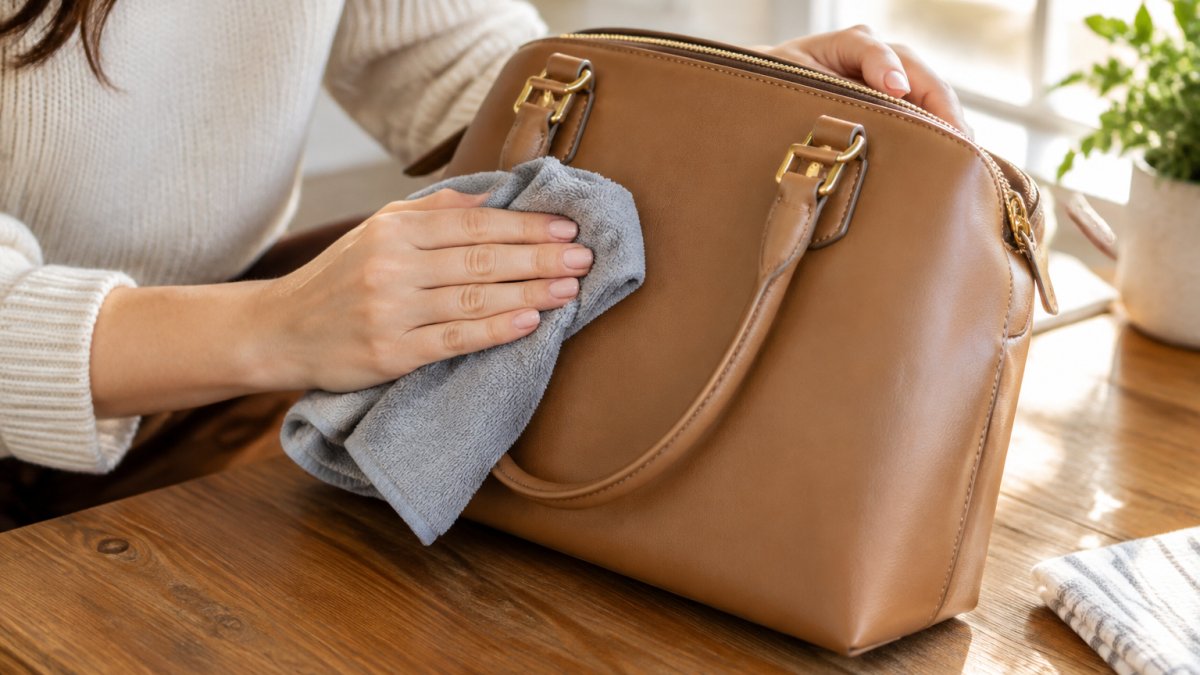
A common mistake is storing a bag in a plastic bin in a hot closet. Moisture gets trapped, the coating softens, and peeling starts from the inside. Store bags in a breathable dust bag in a cool, dry spot instead. If you want a deeper walkthrough, our guide on how to prevent faux leather from peeling and cracking covers the full routine step by step.
Is Faux Leather Waterproof? Water and Stain Resistance Explained
Faux leather is water-resistant, not fully waterproof. The polyurethane or PVC coating sheds spills and light rain well, which makes it a practical choice for commuter bags and kids' accessories. Water will not soak straight through the surface the way it does on untreated fabric.
Where it falls short is seams and edges, where stitching creates tiny openings that wick moisture into the base fabric. Prolonged soaking can also work under the coating at worn corners.
Stain resistance is a genuine strength. Coffee, ink, and makeup wipe off a sealed surface with a damp cloth. That is one reason faux leather suits light-colored bags where real leather would show every mark.
Faux Leather Conditioner: Does It Help Bags Last Longer?
A conditioner can help, but only the right kind. Faux leather does not absorb moisture like real leather, so traditional conditioners mostly sit on the surface. A product made for synthetic leather, applied sparingly, keeps the coating supple and slows drying and cracking.
What most guides miss is that cleaning matters more than conditioning. For a full routine, see our guide on how to clean faux leather bags.
Watch out: over-conditioning is a real risk. Too much product leaves a tacky film that attracts dust and can break down the coating faster. A thin coat every few months is plenty.
How to Judge Faux Leather Quality Before You Buy
Quality faux leather feels supple, not stiff, and springs back when you press a thumbnail into it. The backing tells you just as much: a soft, dense felt holds stitches and resists stretching, while a thin, papery backing signals peeling under stress.
Run through this checklist before you buy:
- Press the surface: does it spring back or hold a dent?
- Flex a corner: does the coating crack along the fold?
- Check the backing: is it a soft felt or a thin, scratchy mesh?
- Look at the edges: is the coating sealed or raw and flaky?
- Smell it: a sharp chemical odor often means low-grade plasticizers
- Ask about fiber density and coating thickness if the seller lists them
The Labels Are Not the Whole Story
PU, PVC, vegan leather, and coated fabric are not interchangeable performance grades. PU is generally more flexible and lighter than PVC and ages more gracefully, but thin PU on a weak backing still fails faster than a well-made PVC bag. PVC is heavier, stiffer, and more abrasion-resistant, but cracks along fold lines when cold or dry.
The practical takeaway is to ignore the label and assess the material itself. A top notch faux leather will feel supple, recover from pressure, and show a dense, soft backing on the reverse. A low-grade sheet will feel stiff, hold a dent, and reveal a thin, scratchy mesh or papery backing that will not hold stitches under load.
Buying Checks That Separate Quality Tiers
Before you commit, ask the seller for coating thickness and backing fiber density. A dense felt backing with consistent coating thickness is the signature of material built to last.
Our own faux leather is top notch quality, with a soft felt backing that holds up to folding, stitching, and daily handling. If you are sourcing material at volume, our buyer's guide to high quality faux leather wholesale walks through what to ask before ordering.
Choosing Faux Leather for Your Next Bag Project
Match the material to the job. Structured totes and work bags need a firmer faux leather with a dense backing to hold shape under a laptop and daily gear. Slouchy hobos and clutches can use a softer, more pliable sheet.
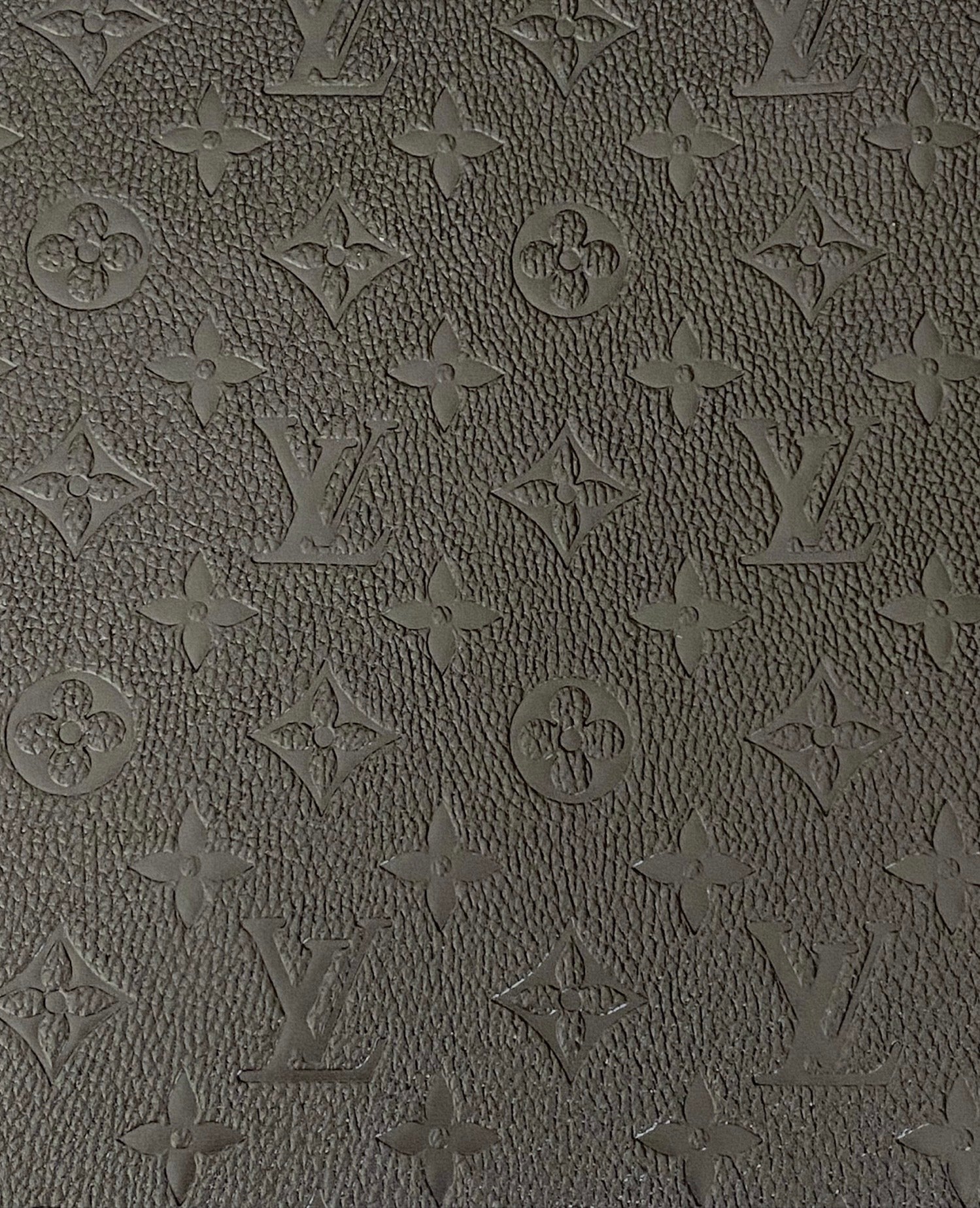
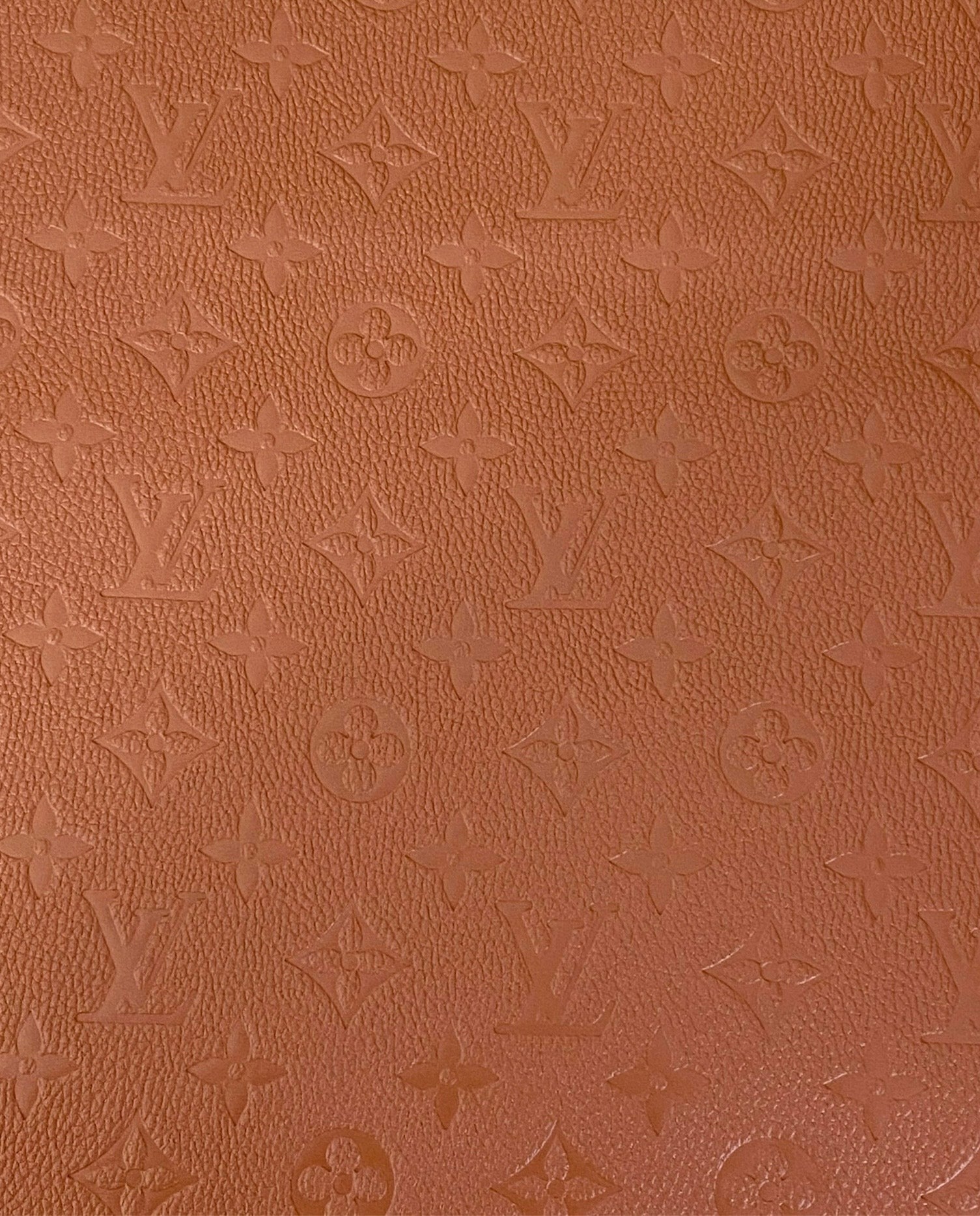
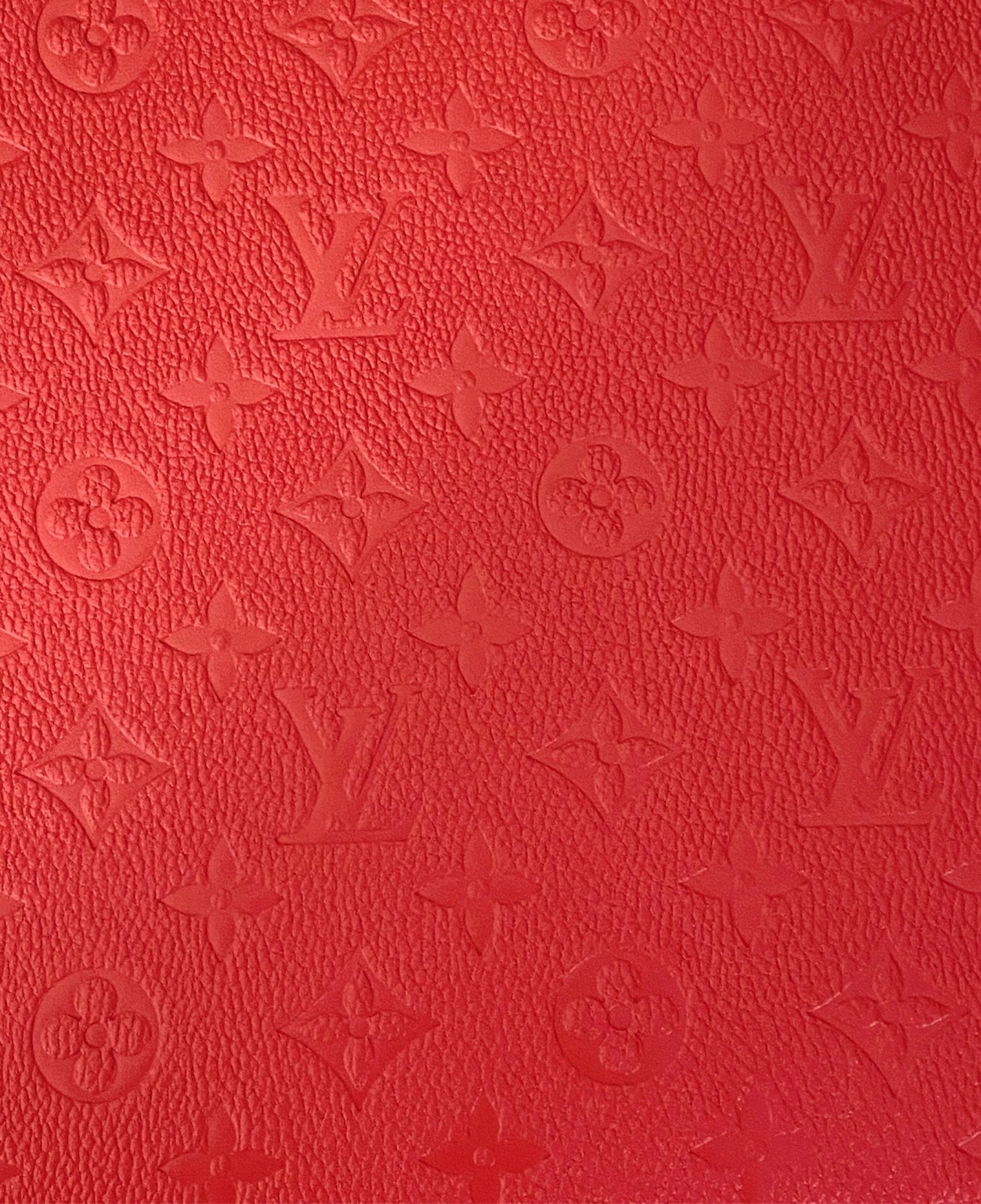
Our embossed faux leather rolls come in a 52" by 12" size for $25.00, with a felt backing. The black embossed textured faux leather suits work bags and wallets, while the tan cognac embossed faux leather gives a classic, professional look. For a statement piece, the red embossed faux leather and white embossed faux leather both hold their finish well.
If you are still narrowing down sheets, our roundup of the best faux leather sheets for DIY crafts is a good starting point, and you can browse the full product collection to match a color to your project.
The real question is whether you are starting with quality material. At Chic Girl Supplies, we stock top notch quality faux leather with a soft felt backing, embossed textures, and roll sizes for a range of projects.
Frequently Asked Questions
Is faux leather durable enough for everyday bags?
For most everyday use, yes. A well-made faux leather bag with a thick polyurethane coating, a sturdy base fabric, and reinforced stitching can handle daily commutes, errands, and regular handling. The key is quality: thin, poorly bonded faux leather peels within months, while better material holds its surface for years. Faux leather durability depends far more on how the material is made and how the bag is constructed than on the fact that it is synthetic.
How can you stop a faux leather bag from peeling?
Store the bag away from direct sunlight and heat, wipe it with a soft damp cloth instead of harsh cleaners, and avoid overstuffing it so the coating does not stretch and crack. Rotate bags so one does not take daily abuse, and keep them in a dust bag when not in use. These habits slow wear and tear and are the most reliable answer to how to stop faux leather bag from peeling.
Is faux leather waterproof?
Faux leather resists water because its polyurethane or PVC coating keeps moisture from soaking in, but it is not fully waterproof. Seams, zippers, and the felt backing can let water through in heavy rain. A quick wipe with a damp cloth handles spills and light rain fine. For a bag that sees serious weather, treat the surface gently and dry it immediately rather than letting it stay wet.
Is vegan leather as durable as genuine leather?
It depends on the material and the construction. High-quality PU faux leather can match or beat lower-grade genuine leather in abrasion resistance and colorfastness, and it resists cracking better in dry conditions. Full-grain real leather still wins on repairability and long-term patina, often lasting decades with care. For a handmade bag meant to look sharp for several years of regular use, quality faux leather is a practical, cruelty-free choice.
